
Hemorrhoid symptoms often keep coming back because the factors that trigger them have not changed. Constipation, straining during bowel movements, diarrhea and prolonged toilet sitting can repeatedly place pressure on sensitive anal tissues. Even when itching, swelling or discomfort improves, the contributing habits or underlying hemorrhoidal changes may remain.
A recurring flare-up does not necessarily mean that a new hemorrhoid has formed. Previously symptomatic tissue may become irritated again, and some internal hemorrhoids can continue to prolapse or bleed intermittently. Understanding why symptoms return helps distinguish temporary relief from habits and treatments that may provide better long-term control.
Why hemorrhoids can flare up repeatedly
Hemorrhoidal tissue is a normal part of the anal canal. It contains blood vessels, connective tissue and supporting muscle that contribute to anal closure. Symptoms develop when these cushions become enlarged, irritated or otherwise problematic.
Consider what happens during a difficult bowel movement. Hard stool may require additional pushing, increasing pressure on the anal cushions. The discomfort may subside afterward, but if constipation returns several days later, another difficult bowel movement can irritate the same tissues. Remaining seated on the toilet for extended periods adds another source of unnecessary pressure.
Diarrhea can contribute to recurring irritation through frequent bowel movements and repeated cleaning. Changes in stool consistency may also make comfortable passage harder to maintain. The important goal is not simply having more frequent bowel movements, but passing reasonably formed stool without prolonged pushing or discomfort.
For some people, ongoing anatomical changes also matter. Internal hemorrhoids that repeatedly protrude during bowel movements may continue to cause symptoms even when stool habits improve. A recurrent episode can therefore reflect persistent triggers, symptomatic tissue or another condition producing similar complaints.
When hemorrhoid symptoms keep returning, it is understandable to look beyond temporary creams and consider other forms of support. Some readers may encounter products such as the Venalys hemorrhoid supplement, which its manufacturer describes as a cacao-based capsule formula. However, claims that supplements can rebuild hemorrhoidal tissue or prevent recurrence permanently require independent clinical evidence. Reviewing ingredients with a healthcare professional, while addressing bowel habits and persistent symptoms, is a more informed approach.
Does the type of hemorrhoid affect recurrence?
Internal and external hemorrhoids differ in location, typical symptoms and potential treatment. Recognizing these distinctions can make recurring symptoms easier to describe to a clinician, although symptoms alone cannot establish the diagnosis.
Internal hemorrhoids develop inside the anal canal. They may cause bright-red bleeding during bowel movements without significant pain. Some prolapse, meaning that tissue extends through the anal opening. Mild prolapse may resolve spontaneously, while more substantial prolapse may require manual reduction or remain outside. These differences help clinicians assess the condition and select appropriate treatment.
External hemorrhoids occur beneath the skin surrounding the anus. They may produce itching, swelling or tenderness. A thrombosed external hemorrhoid contains a blood clot and can cause sudden, substantial pain. This presentation differs from the intermittent painless bleeding associated with some internal hemorrhoids.
| Feature | Internal hemorrhoids | External hemorrhoids |
|---|---|---|
| Location | Inside the anal canal | Under the skin around the anus |
| Typical symptoms | Bright-red bleeding or prolapse | Itching, discomfort or tender swelling |
| Pain | Often painless unless complicated | May be painful, particularly when thrombosed |
| Clinical assessment | Examination may assess prolapse | Examination checks external swelling and alternative causes |
The same symptom can have different explanations. Anal fissures, inflammatory conditions and other anorectal or intestinal problems may overlap with hemorrhoid symptoms. Repeated bleeding or unexplained changes should not automatically be attributed to a previous hemorrhoid diagnosis.
Why temporary symptom relief may not last
Warm sitz baths and appropriate over-the-counter hemorrhoid products can help ease mild itching, swelling or discomfort. These measures may make an episode easier to tolerate without necessarily changing the bowel habits or persistent tissue changes associated with its recurrence.
An internal hemorrhoid that repeatedly prolapses, for example, may require a different approach from topical symptom relief. Similarly, recurring hard stools can continue to expose irritated tissue to unnecessary pressure, even after temporary discomfort settles.
The NIDDK hemorrhoid treatment guidance distinguishes temporary symptom relief from bowel-habit measures such as eating fiber, drinking fluids and avoiding straining. That distinction helps explain why soothing a flare-up alone may not prevent another episode.
Relief is not the same as prevention: A cream or warm bath may ease a flare-up, but bowel habits and persistent symptomatic tissue can still contribute to future episodes.
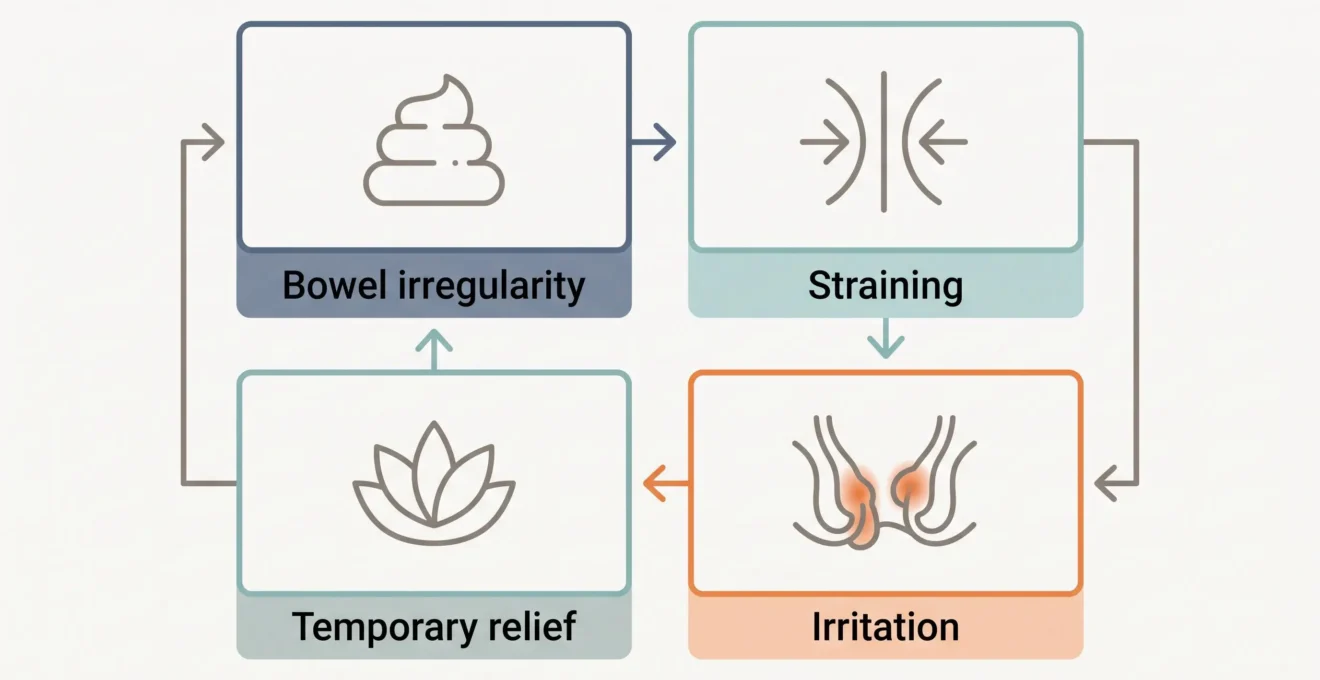
The practical distinction is whether the measures used only calm the present discomfort or also address the factors that could trigger another episode. Both goals may matter, but they require different expectations.
How to reduce recurring hemorrhoid flare-ups
Daily prevention focuses on comfortable bowel movements and avoiding unnecessary pressure on anal tissues. These changes cannot guarantee that symptoms will never return, but they address several recognized contributors to hemorrhoid problems.
Make stool consistency a priority
Dietary fiber helps regulate stool consistency and can make hard stools easier to pass. Increase fiber gradually if your current intake is low, because a sudden substantial increase may cause bloating or gas.
The colorectal surgeons’ hemorrhoid guidance recommends approximately 20–35 grams of dietary fiber daily, alongside fluid intake and better bowel habits. This is a general management target, not a guarantee that symptoms will disappear.
Fiber-rich options include vegetables, fruit, beans, lentils and whole grains. Aim for a comfortable, formed stool that passes without forceful pushing rather than trying to achieve an arbitrary number of daily bowel movements.
Vegetables can contribute dietary fiber to meals, making them useful in a broader plan for comfortable bowel movements. A separate guide to vegetables supporting bowel regularity explores food choices, though it is not a hemorrhoid-treatment guideline.
For readers considering a fiber supplement, this explanation of psyllium and bowel regularity provides additional context about its role in stool consistency, although individual responses vary.
Reduce unnecessary pressure during bowel movements
Try not to push forcefully or hold your breath while passing stool. Respond to the natural urge rather than repeatedly delaying a bowel movement, and avoid remaining on the toilet after finishing. Repeated constipation or diarrhea warrants attention because both patterns may prolong irritation.
Changing toilet habits can be useful even when symptoms are absent. For example, shorter visits reduce unnecessary sitting, while improving stool consistency may lessen the need to strain. The benefit is not a guaranteed cure but a reduction in potentially aggravating circumstances.
- Choose fiber-rich foods regularly and increase fiber gradually if needed.
- Drink enough fluids for your individual needs, especially when increasing fiber.
- Avoid pushing or holding your breath during bowel movements.
- Keep toilet visits brief and avoid unnecessary sitting.
- Pay attention to stool consistency rather than forcing a daily schedule.
- Seek advice for persistent constipation or diarrhea.
If symptoms return, note whether the episode followed hard stools, diarrhea, prolonged toilet sitting or a change in routine. Recording when symptoms began, how long they lasted and whether bleeding or protruding tissue occurred may help a clinician interpret the pattern. These observations support a medical discussion but cannot independently confirm hemorrhoidal disease.
What if hemorrhoids return after treatment?
The meaning of recurring symptoms depends partly on what treatment was previously used and what symptoms have returned. After conservative treatment, another flare-up associated with hard stools or straining may suggest that contributing bowel habits remain difficult to control. This is a reason to review the routine and persistent symptoms, not proof of a new hemorrhoid.
When previously diagnosed internal hemorrhoids continue to protrude or bleed, a clinician may assess the degree of prolapse and whether treatment beyond bowel-habit management is appropriate. Symptoms that persist or change after an office procedure deserve reassessment because they do not automatically establish either treatment failure or recurrence of the same condition.
Rubber band ligation is an established procedure for selected internal hemorrhoids. A clinician places a band around suitable tissue to interrupt its blood supply. Additional sessions or repeat treatment may sometimes be considered. This procedure is not used for external hemorrhoids, and suitability depends on the clinical findings.
Other office-based treatments or surgery may be appropriate for selected patients with persistent symptoms, substantial prolapse or inadequate relief from conservative care. The choice involves symptom severity, hemorrhoid type, expected benefits, potential complications and recovery. No procedure guarantees that symptoms can never return.
Understanding the options is easier when bowel-habit care, medical assessment and possible procedural treatment are viewed as distinct decisions rather than an automatic sequence.
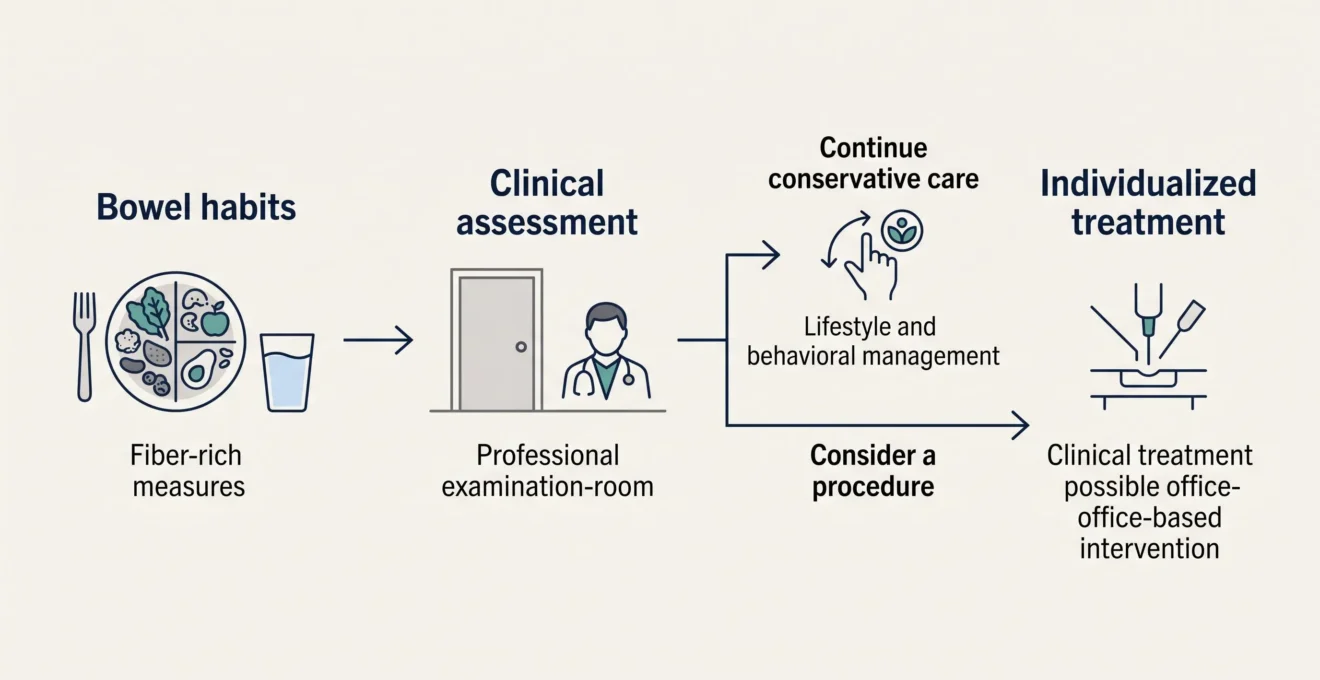
Before deciding on another treatment, useful questions include whether the diagnosis remains correct, whether prolapse is involved, which treatments are appropriate for the hemorrhoid type and what bowel-habit changes should continue afterward. The answers depend on examination rather than symptoms alone.
When recurring symptoms need medical attention
Recurring anal discomfort is not always caused by hemorrhoids. Fissures, skin conditions and other intestinal or anorectal problems can produce overlapping symptoms. Even when hemorrhoids have been diagnosed previously, a new pattern of pain, bleeding or bowel changes should not automatically be assigned the same explanation.
Arrange a medical assessment for repeated rectal bleeding, persistent lumps, recurring symptoms that interfere with daily life or discomfort that fails to improve with appropriate home care. If an over-the-counter treatment has not helped after about one week, professional advice is generally appropriate. This interval applies to a lack of improvement with routine home treatment, not to potentially serious symptoms that require earlier attention.
A clinician may review bowel habits, previous treatments, the timing of episodes and associated symptoms before examining the area. Further evaluation may be needed if bleeding or pain could have another explanation.
Repeated rectal bleeding deserves medical assessment because hemorrhoids are not the only possible cause. Seek urgent care for heavy or continuous bleeding, large clots or severe pain. This article provides general information and cannot replace an individual diagnosis.
The bottom line
Hemorrhoid symptoms often return because the same bowel habits, persistent symptomatic tissue or another underlying problem continues to cause discomfort. Improving stool consistency, reducing straining and avoiding prolonged toilet sitting may help limit flare-ups. When symptoms persist, the most useful next step is to establish what is actually causing them and whether additional treatment is appropriate.
If symptoms continue despite changes to bowel habits, a clinician can help determine whether a procedure is appropriate. This discussion of hemorrhoid banding treatment options offers further context for questions to raise during that consultation.