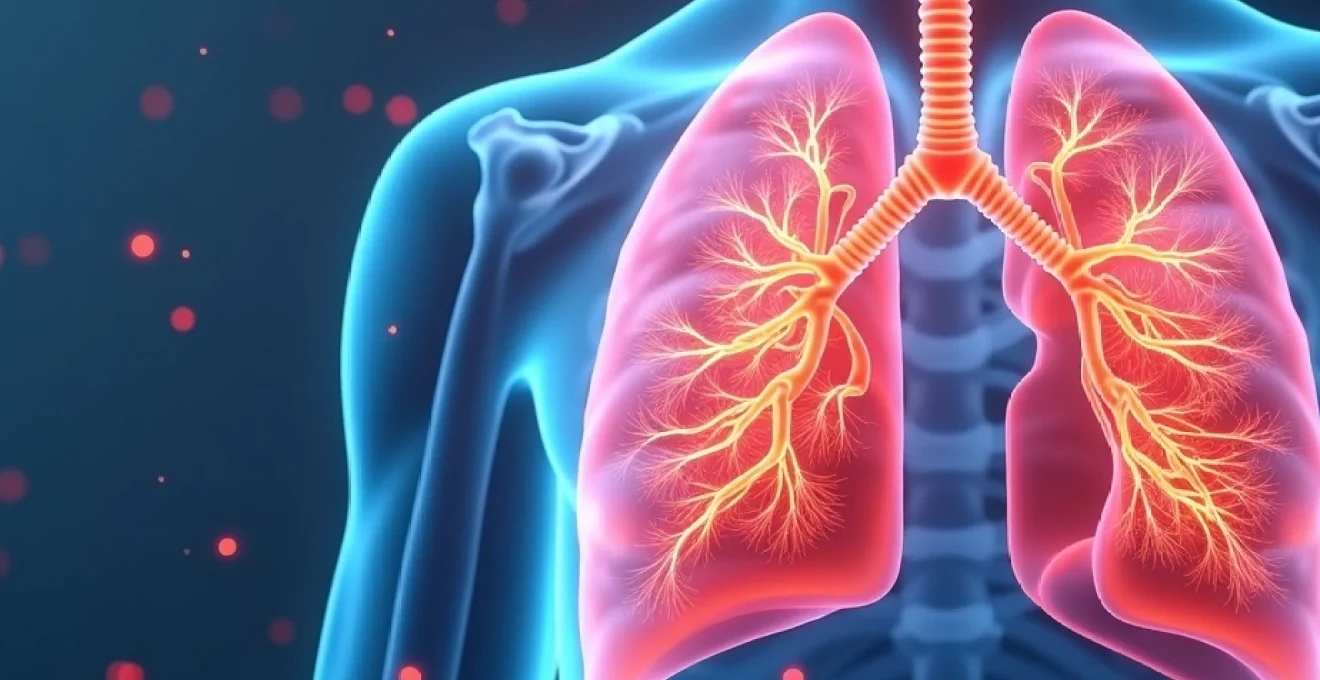
The discovery of a 9-millimetre lung nodule during routine imaging often triggers immediate concern among patients, yet understanding the clinical significance requires careful evaluation of multiple factors. A 9mm pulmonary nodule sits at a critical threshold in medical assessment protocols, representing the boundary between small nodules requiring surveillance and larger lesions demanding more aggressive diagnostic intervention. This size classification holds particular importance in contemporary thoracic medicine, as it directly influences management decisions and patient outcomes. Modern imaging techniques have dramatically improved our ability to detect these small lesions, leading to increased detection rates and subsequent clinical dilemmas regarding appropriate management strategies.
Clinical significance of 9mm pulmonary nodule detection
A 9-millimetre lung nodule occupies a pivotal position in pulmonary medicine, straddling the line between small nodules that may warrant observation and those requiring immediate diagnostic evaluation. The clinical significance of this specific size relates to established risk stratification models that demonstrate measurably increased malignancy potential compared to smaller lesions. Research indicates that nodules measuring 8-9mm carry approximately 18-25% risk of malignancy , representing a substantial increase from the 1-2% risk associated with nodules under 6mm in diameter.
The anatomical location of a 9mm nodule within the lung parenchyma significantly influences its clinical importance. Upper lobe nodules, particularly those in the right upper lobe, demonstrate higher malignancy rates compared to lower lobe lesions. Central nodules near major airways may cause symptoms earlier than peripheral lesions of identical size, potentially leading to earlier detection of malignant processes. Additionally, the relationship between nodule size and patient age creates important diagnostic considerations, as older patients with 9mm nodules face substantially higher cancer risks than younger individuals with identical imaging findings.
Fleischner society guidelines for 9mm solid nodule management
The Fleischner Society guidelines provide standardised management recommendations for 9mm solid pulmonary nodules based on patient risk stratification. For patients classified as low-risk (younger age, no smoking history, minimal environmental exposures), the guidelines recommend initial computed tomography surveillance at 3-6 months, followed by continued monitoring at 12-24 months if the nodule remains stable. High-risk patients require more aggressive surveillance protocols, typically involving 3-month follow-up CT scans and consideration for positron emission tomography (PET) imaging or tissue sampling.
These evidence-based recommendations reflect extensive research demonstrating that 9mm nodules require different management approaches than smaller lesions. The guidelines emphasise that nodule stability over 24 months in low-risk patients suggests benign aetiology, whilst any growth pattern warrants immediate biopsy consideration. The threshold effect at 8-9mm represents a critical decision point where surveillance transitions from optional to mandatory, reflecting the measurable increase in malignancy probability at this size range.
Risk stratification using brock university cancer prediction model
The Brock University model provides sophisticated risk assessment for 9mm pulmonary nodules by incorporating multiple clinical and radiological variables into probability calculations. This validated prediction model considers patient age, gender, smoking history, nodule location, spiculation patterns, and morphological characteristics to generate individualised malignancy risk estimates. For 9mm nodules, the model typically generates probabilities ranging from 5-65%, depending on these various risk factors.
Implementation of the Brock model has revolutionised clinical decision-making for intermediate-sized nodules like those measuring 9mm. The model’s accuracy in predicting malignancy exceeds traditional size-based criteria alone, enabling more precise patient counselling and management planning. Clinicians increasingly rely on these sophisticated algorithms to determine whether immediate biopsy, PET imaging, or continued surveillance represents the optimal approach for individual patients presenting with 9mm nodules.
Low-dose CT screening programme implications
Low-dose computed tomography (LDCT) screening programmes have dramatically increased the detection of 9mm pulmonary nodules in high-risk populations, particularly current and former smokers aged 50-80 years. These screening initiatives have revealed that approximately 20-25% of participants demonstrate nodules measuring 8-10mm, creating significant clinical workload and patient anxiety. The detection of 9mm nodules in screening populations requires careful balance between appropriate diagnostic evaluation and avoiding unnecessary procedures.
Screening-detected 9mm nodules present unique management challenges compared to incidentally discovered lesions. The higher baseline cancer risk in screened populations influences the aggressive management approaches recommended for these findings.
Early data from major screening trials suggests that prompt evaluation of 9mm screening-detected nodules leads to diagnosis of early-stage lung cancers with excellent treatment outcomes.
This evidence supports current recommendations for expedited workup of 9mm nodules discovered through LDCT screening programmes.
Malignancy probability assessment in Sub-Centimetre lesions
Assessment of malignancy probability in 9mm nodules requires sophisticated understanding of multiple contributing factors beyond simple size measurements. Age represents perhaps the most significant predictor, with patients over 65 years demonstrating malignancy rates approaching 35-40% for 9mm nodules, compared to rates under 10% in patients younger than 45 years. Smoking history compounds this risk substantially, with current smokers showing 3-4 times higher malignancy rates than never-smokers with identical nodule characteristics.
Environmental and occupational exposure histories provide additional risk stratification information for 9mm nodules. Asbestos exposure, radon exposure, and exposure to other known pulmonary carcinogens significantly increase malignancy probability. Family history of lung cancer, particularly in first-degree relatives, also influences risk assessment. The integration of these multiple risk factors creates individualised probability estimates that guide management decisions far more effectively than size-based criteria alone.
Radiological classification and morphological assessment
Advanced radiological assessment of 9mm pulmonary nodules encompasses detailed morphological analysis using high-resolution computed tomography techniques. Modern multi-detector CT scanners provide sub-millimetre resolution imaging that enables precise characterisation of nodule density, margins, internal architecture, and relationship to surrounding structures. These detailed imaging characteristics provide crucial information for predicting malignancy probability and guiding subsequent management decisions.
The morphological assessment process involves systematic evaluation of multiple radiological parameters, each contributing to overall risk stratification. Nodule density measurements, expressed in Hounsfield units, help differentiate solid from subsolid lesions and identify calcification patterns suggestive of benign aetiology. Margin analysis reveals spiculation patterns, lobulation, and other features associated with malignant processes. Internal architecture assessment identifies cavitation, air bronchograms, and other structural characteristics that influence diagnostic considerations.
High-resolution CT characteristics and density measurements
High-resolution computed tomography (HRCT) protocols for 9mm nodule assessment utilise thin-section imaging (typically 1-2mm slice thickness) with high spatial resolution reconstruction algorithms. These technical parameters enable detailed visualisation of nodule characteristics that may not be apparent on standard chest CT examinations. Density measurements using standardised Hounsfield unit analysis provide quantitative assessment of nodule composition, helping differentiate solid lesions (>-300 HU) from ground-glass opacities (-800 to -600 HU).
The volumetric assessment capabilities of modern CT technology allow precise measurement of 9mm nodules and calculation of doubling times during surveillance periods. Computer-assisted detection (CAD) systems increasingly assist radiologists in identifying subtle changes in nodule characteristics that might indicate malignant transformation. These technological advances have improved the accuracy of nodule characterisation and enhanced the ability to detect early changes suggesting malignant behaviour in 9mm lesions.
Spiculation patterns and edge definition analysis
Spiculation patterns represent one of the most significant morphological predictors of malignancy in 9mm pulmonary nodules. These radiating linear opacities extending from the nodule margin into surrounding lung parenchyma occur in approximately 80-90% of malignant nodules compared to fewer than 20% of benign lesions. The presence, extent, and characteristics of spiculation provide important diagnostic information that influences management decisions for intermediate-sized nodules.
Edge definition analysis encompasses assessment of nodule margins ranging from smooth and well-defined boundaries to irregular, lobulated, or spiculated contours. Smooth, well-circumscribed margins suggest benign aetiology in the majority of cases, whilst irregular margins with lobulation or spiculation patterns indicate higher malignancy probability.
Studies demonstrate that 9mm nodules with spiculated margins carry malignancy risks exceeding 60%, compared to fewer than 15% for smooth-margined lesions of identical size.
Ground-glass opacity component evaluation
Ground-glass opacity components within 9mm nodules significantly influence both malignancy probability and management approaches. Pure ground-glass nodules (pGGNs) measuring 9mm demonstrate lower immediate malignancy risks but require extended surveillance due to potential for malignant transformation over time. Part-solid nodules containing both ground-glass and solid components show higher malignancy rates, with risk correlating to the size of the solid component within the lesion.
The assessment of ground-glass components requires careful attention to imaging technique and interpretation standards. Window and level settings significantly influence the apparent extent of ground-glass opacity, necessitating standardised viewing parameters for consistent assessment. The ratio of solid to ground-glass components provides important prognostic information , with predominantly solid lesions requiring more aggressive evaluation than predominantly ground-glass lesions of similar overall dimensions.
Calcification patterns and benign morphological features
Calcification patterns within 9mm nodules provide crucial information for distinguishing benign from malignant lesions. Central, complete, popcorn-like, and laminated calcification patterns typically indicate benign aetiology, whilst eccentric, punctate, or absent calcification suggests higher malignancy probability. The identification of fat density within nodules (hamartomas) or specific calcification patterns (granulomas) can establish definitive benign diagnosis without requiring tissue sampling.
Benign morphological features in 9mm nodules include smooth margins, homogeneous density, central or diffuse calcification, and stability over extended observation periods. The combination of multiple benign features significantly reduces malignancy probability, potentially allowing conservative management approaches. However, the absence of clearly benign features in 9mm nodules necessitates continued diagnostic evaluation, as malignant lesions may occasionally demonstrate apparently benign characteristics in early stages.
Differential diagnosis for 9mm lung nodules
The differential diagnosis for 9mm pulmonary nodules encompasses a broad spectrum of pathological processes, ranging from infectious and inflammatory conditions to primary lung malignancies and metastatic disease. Infectious causes include bacterial infections (particularly Mycobacterium tuberculosis ), fungal infections (histoplasmosis, coccidioidomycosis, blastomycosis), and parasitic infections in appropriate epidemiological contexts. These infectious nodules may demonstrate enhancement patterns on contrast-enhanced imaging and often present with associated clinical symptoms or laboratory abnormalities.
Inflammatory and autoimmune conditions represent another significant category in the differential diagnosis of 9mm nodules. Rheumatoid nodules, sarcoidosis, Wegener’s granulomatosis, and other systemic inflammatory conditions can produce pulmonary nodules identical in appearance to malignant lesions. The clinical context, including patient symptoms, laboratory findings, and presence of systemic disease, provides important diagnostic clues. Inflammatory nodules may demonstrate FDG uptake on PET imaging similar to malignant lesions , complicating the diagnostic evaluation process and sometimes necessitating tissue sampling for definitive diagnosis.
Benign neoplasms constitute an important diagnostic consideration for 9mm nodules, with hamartomas representing the most common benign lung tumour. These lesions typically demonstrate characteristic popcorn calcification patterns or fat density on CT imaging, enabling confident radiological diagnosis. Other benign tumours include fibromas, lipomas, and neural tumours, which may require tissue sampling for definitive characterisation. Primary lung malignancies, including adenocarcinoma, squamous cell carcinoma, and small cell lung cancer, represent the most concerning diagnostic possibility for 9mm nodules, particularly in high-risk patient populations.
Metastatic disease to the lungs can present as 9mm nodules, particularly from primary tumours known for pulmonary metastasis patterns. Common primary sites include breast, colorectal, renal, and sarcoma malignancies. The presence of multiple nodules, patient history of previous malignancy, and characteristic imaging patterns may suggest metastatic disease. However, solitary 9mm nodules can represent metastatic disease, necessitating consideration of this possibility in patients with appropriate cancer histories, even in the absence of other obvious metastatic lesions.
Advanced diagnostic techniques and imaging protocols
Contemporary diagnostic evaluation of 9mm pulmonary nodules employs sophisticated imaging techniques that extend far beyond standard chest computed tomography. These advanced modalities provide functional and metabolic information that complements morphological assessment, enabling more accurate characterisation of indeterminate lesions. The integration of multiple imaging techniques creates comprehensive diagnostic profiles that guide clinical decision-making and reduce the need for invasive procedures in appropriately selected patients.
Multi-parametric imaging approaches combine structural, functional, and metabolic information to create detailed nodule characterisation profiles. This comprehensive assessment strategy has revolutionised the evaluation of intermediate-sized nodules like those measuring 9mm, providing clinicians with unprecedented diagnostic accuracy. The systematic application of advanced imaging protocols has reduced unnecessary biopsies while improving the detection of early-stage malignancies in patients presenting with 9mm pulmonary nodules.
PET-CT standardised uptake value interpretation
Positron emission tomography-computed tomography (PET-CT) imaging provides metabolic assessment of 9mm pulmonary nodules through measurement of fluorodeoxyglucose (FDG) uptake patterns. Standardised uptake values (SUV) quantify FDG accumulation within nodules, with values exceeding 2.5 generally suggesting malignancy and values below 2.0 indicating likely benign aetiology. However, the interpretation of SUV measurements in 9mm nodules requires careful consideration of technical factors, including partial volume effects that may underestimate uptake in small lesions.
The diagnostic accuracy of PET-CT for 9mm nodules demonstrates sensitivity ranging from 85-95% for detecting malignancy, with specificity values of 70-85% depending on patient population and imaging protocols.
False-positive FDG uptake may occur in inflammatory conditions, active infections, and some benign tumours, whilst false-negative results can be seen in minimally invasive adenocarcinomas and carcinoid tumours.
These limitations necessitate integration of PET findings with clinical and morphological information for optimal diagnostic accuracy.
Dynamic Contrast-Enhanced CT perfusion studies
Dynamic contrast-enhanced computed tomography (DCE-CT) provides assessment of nodule vascularity and perfusion characteristics that may distinguish malignant from benign 9mm lesions. This technique involves sequential CT imaging following intravenous contrast administration, enabling measurement of enhancement patterns and calculation of perfusion parameters. Malignant nodules typically demonstrate rapid initial enhancement (>15-20 Hounsfield units at 1-2 minutes) followed by washout patterns, whilst benign lesions often show minimal or delayed enhancement.
The implementation of DCE-CT protocols for 9mm nodule assessment requires standardised imaging techniques and careful attention to timing parameters. Quantitative perfusion analysis using specialised software packages provides objective measurements that supplement visual assessment of enhancement patterns. These quantitative approaches have improved the diagnostic accuracy of contrast-enhanced CT evaluation, particularly for nodules in the 8-12mm size range where morphological features alone may be insufficient for confident characterisation.
MRI Diffusion-Weighted imaging applications
Magnetic resonance imaging (MRI) with diffusion-weighted imaging (DWI) represents an emerging technique for evaluating 9mm pulmonary nodules, particularly in patients who cannot undergo CT-based assessments due to contrast allergies or radiation exposure concerns. DWI measures the random motion of water molecules within tissues, with malignant lesions typically demonstrating restricted diffusion due to increased cellular density. Apparent diffusion coefficient (ADC) values provide quantitative assessment of diffusion properties, with lower values suggesting malignancy.
The technical challenges of pulmonary MRI, including respiratory motion artefacts and cardiac pulsation effects, have limited its widespread application for lung nodule assessment. However, recent advances in fast imaging sequences and motion compensation techniques have improved image quality sufficiently to enable reliable evaluation of larger nodules.
Research demonstrates that ADC values below 1.0-1.2 x 10⁻³ mm²/s strongly suggest malignancy in pulmonary nodules, though validation studies specific to 9mm lesions remain limited. The integration of DWI findings with conventional morphological assessment may enhance diagnostic confidence, particularly in challenging cases where CT and PET findings are inconclusive or contradictory.
Tissue sampling methods and pathological confirmation
Definitive diagnosis of 9mm pulmonary nodules ultimately requires histopathological examination when imaging findings remain indeterminate or suggest malignancy. Multiple tissue sampling approaches are available, each with distinct advantages, limitations, and complication profiles that must be carefully considered in the context of individual patient characteristics and clinical circumstances. The selection of appropriate tissue sampling methodology depends on nodule location, patient comorbidities, institutional expertise, and the urgency of diagnostic clarification.
CT-guided percutaneous needle biopsy represents the most commonly employed tissue sampling technique for 9mm nodules, offering high diagnostic accuracy with relatively low morbidity rates. This minimally invasive approach utilises real-time CT guidance to precisely position biopsy needles within target lesions, enabling tissue acquisition from nodules as small as 5-6mm in diameter. Diagnostic yields for 9mm nodules typically exceed 90% when performed by experienced operators, with complication rates remaining acceptably low in appropriately selected patients. However, pneumothorax occurs in approximately 20-30% of cases, with 5-10% requiring chest tube placement.
Bronchoscopic approaches, including conventional flexible bronchoscopy and electromagnetic navigation bronchoscopy (ENB), provide alternative tissue sampling methods for 9mm nodules, particularly those located in central or peribronchial locations. Conventional bronchoscopy demonstrates lower diagnostic yields for peripheral 9mm nodules, typically achieving successful tissue acquisition in 30-50% of cases. However, ENB technology has significantly improved bronchoscopic diagnostic capabilities, with success rates approaching 70-80% for peripheral nodules in this size range. The primary advantage of bronchoscopic techniques lies in their lower pneumothorax rates and ability to sample multiple sites during single procedures.
Surgical tissue sampling through video-assisted thoracoscopic surgery (VATS) provides the highest diagnostic accuracy for 9mm pulmonary nodules, approaching 100% success rates in experienced centres. This approach enables complete nodule excision with adequate margins for comprehensive pathological assessment, providing both diagnostic information and potential therapeutic intervention.
VATS procedures for 9mm nodules often serve dual purposes, establishing definitive diagnosis whilst providing curative treatment for early-stage malignancies.
However, surgical approaches carry higher morbidity risks and require general anaesthesia, limiting their application to patients with adequate performance status and pulmonary function reserves.
Surveillance protocols and follow-up strategies
Surveillance protocols for 9mm pulmonary nodules require carefully structured follow-up strategies that balance the need for early malignancy detection with the avoidance of unnecessary radiation exposure and patient anxiety. Contemporary surveillance approaches utilise risk-stratified protocols that incorporate patient demographics, smoking history, nodule characteristics, and institutional guidelines to determine optimal monitoring intervals and duration. These evidence-based strategies have evolved significantly over the past decade, reflecting improved understanding of nodule behaviour patterns and natural history.
Standard surveillance protocols for 9mm solid nodules typically involve initial follow-up CT examination at 3-6 months, depending on patient risk stratification and nodule characteristics. Low-risk patients may receive initial surveillance at 6 months, whilst high-risk individuals require 3-month follow-up imaging. Subsequent surveillance intervals extend to 12-month and 24-month timepoints, with nodule stability over 24 months generally indicating benign behaviour. The total surveillance period typically spans 2-3 years for stable nodules, though some guidelines recommend extended monitoring for specific high-risk scenarios or concerning morphological features.
Volumetric assessment techniques have revolutionised surveillance protocols for 9mm nodules, enabling detection of subtle growth patterns that may not be apparent through traditional diameter measurements. Computer-assisted volumetric analysis can identify volume doubling times and growth rates with greater precision than manual measurement techniques. Growth rates exceeding 25% volume increase or doubling times shorter than 400 days typically prompt immediate diagnostic intervention, whilst stable volumes over extended periods support benign classification.
The psychological impact of prolonged surveillance cannot be overlooked in managing patients with 9mm pulmonary nodules. Studies demonstrate that uncertainty regarding nodule significance creates substantial anxiety and impacts quality of life measures.
Effective communication regarding surveillance rationale, expected outcomes, and symptom monitoring helps mitigate patient distress whilst maintaining appropriate vigilance for concerning changes.
Patient education materials, regular communication intervals, and clear guidelines for when to seek immediate medical attention contribute to successful surveillance programme implementation.
Integration of artificial intelligence and machine learning algorithms into surveillance protocols represents an emerging frontier in 9mm nodule management. These sophisticated systems can analyse multiple imaging timepoints simultaneously, identifying subtle patterns predictive of malignant behaviour that may escape human detection. Early validation studies suggest that AI-assisted surveillance protocols may reduce unnecessary biopsies whilst maintaining high sensitivity for malignancy detection, though widespread clinical implementation awaits further validation and regulatory approval.
The management of 9mm pulmonary nodules exemplifies the complexity of modern thoracic medicine, requiring integration of multiple diagnostic modalities, risk assessment tools, and surveillance strategies. Understanding the significance of nodule size, morphological characteristics, and patient-specific factors enables clinicians to provide appropriate counselling and implement evidence-based management approaches. As diagnostic technologies continue advancing and our understanding of nodule behaviour patterns expands, the care of patients with 9mm pulmonary nodules will undoubtedly continue evolving toward more precise, personalised therapeutic strategies.