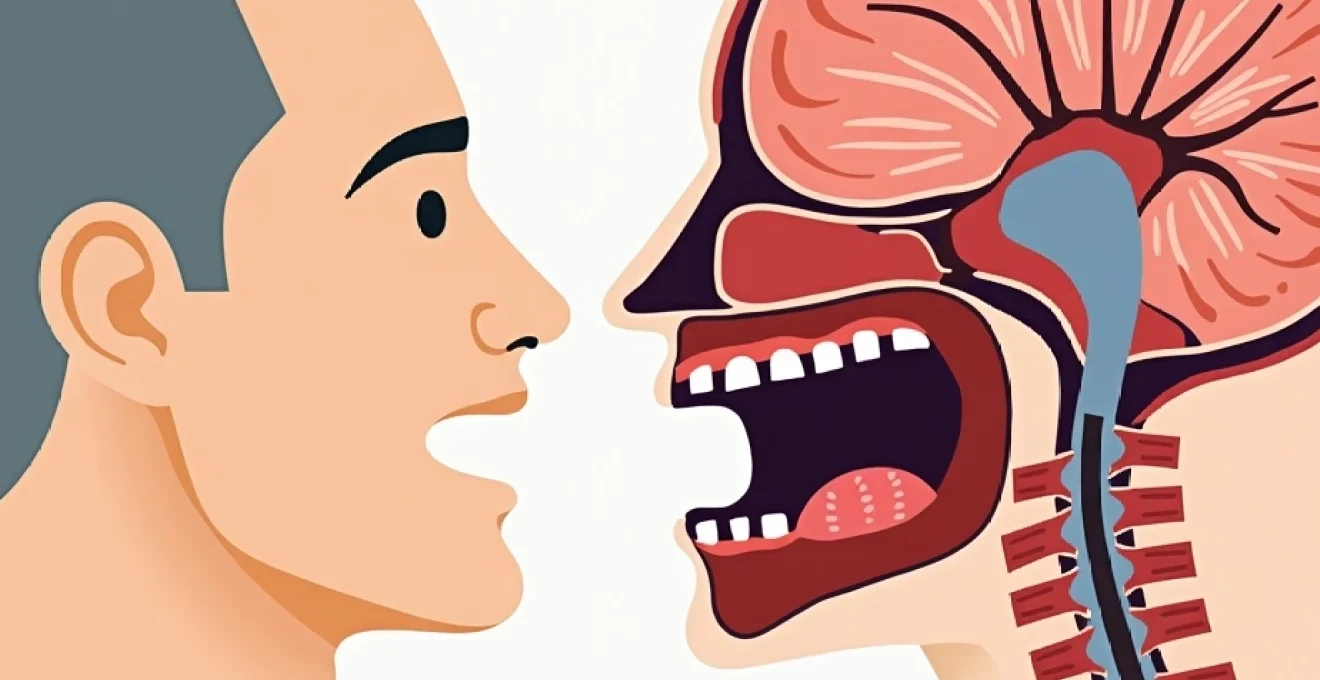
The sensation of needing to yawn to achieve a complete breath represents a fascinating intersection between involuntary physiological responses and respiratory function. This phenomenon, often described as “air hunger” or excessive yawning, affects millions of people worldwide and can significantly impact daily life. When your body feels compelled to yawn repeatedly to satisfy its oxygen needs, it signals underlying disruptions in normal breathing patterns that deserve careful attention.
Understanding why you experience this urge requires examining the complex relationship between yawning mechanisms and respiratory control. Dysfunctional breathing patterns often manifest through compensatory behaviours, with excessive yawning serving as your body’s attempt to reset inadequate ventilation. This intricate physiological response involves multiple systems working together to maintain proper oxygen-carbon dioxide balance, though sometimes these systems can become dysregulated.
Recent research challenges traditional assumptions about yawning, revealing sophisticated neurological and respiratory connections that extend far beyond simple oxygen deficiency theories. The relationship between yawning and breathing involves complex feedback loops that can become disrupted by various medical conditions, medications, and lifestyle factors. Recognition of these patterns has led to improved diagnostic approaches and targeted therapeutic interventions for those experiencing persistent respiratory insufficiency.
Physiological mechanisms behind yawning and respiratory function
The physiological basis for yawning-related breathing difficulties involves intricate interactions between the central nervous system, respiratory muscles, and autonomic control mechanisms. When you experience the need to yawn for adequate respiration, your brainstem respiratory centres are attempting to compensate for perceived inadequacies in ventilation through this powerful involuntary action.
Vagus nerve stimulation and parasympathetic activation during yawning
The vagus nerve plays a crucial role in coordinating yawning responses with respiratory function. During a yawn, parasympathetic activation occurs through vagal stimulation, triggering widespread physiological changes that extend beyond simple mouth opening. This neural pathway influences heart rate variability, digestive function, and inflammatory responses whilst simultaneously coordinating the deep inspiratory effort characteristic of yawning behaviour.
Vagal tone dysregulation can contribute to altered yawning patterns and respiratory sensations. When parasympathetic function becomes compromised, you may experience increased yawning frequency as your nervous system attempts to restore balance through this ancient reflex mechanism. The vagus nerve’s extensive connections throughout the body explain why yawning often accompanies various systemic conditions affecting breathing patterns.
Diaphragmatic excursion and intercostal muscle coordination
Effective respiration relies heavily on coordinated diaphragmatic movement and intercostal muscle function. During normal breathing, the diaphragm performs approximately 70-80% of respiratory work, with intercostal muscles providing support and fine-tuning. However, when breathing efficiency becomes compromised, excessive yawning may serve as a compensatory mechanism to achieve fuller diaphragmatic excursion.
Shallow breathing patterns often develop due to stress, poor posture, or underlying medical conditions, leading to inadequate diaphragmatic engagement. This creates a sensation of incomplete respiration that triggers frequent yawning attempts. The deep inspiration associated with yawning temporarily restores proper diaphragmatic function, providing momentary relief from the sensation of air hunger.
Baroreceptor response and intrathoracic pressure changes
Baroreceptors within the cardiovascular system monitor blood pressure changes and influence respiratory patterns through complex feedback mechanisms. During yawning, significant intrathoracic pressure changes occur, affecting venous return and cardiac output. These pressure fluctuations can temporarily improve circulation and enhance oxygen delivery to tissues, explaining why yawning sometimes provides temporary relief from respiratory discomfort.
The relationship between intrathoracic pressure and yawning frequency becomes particularly relevant in conditions affecting cardiovascular function. When cardiac output is compromised, your body may increase yawning behaviour as an attempt to optimise circulatory dynamics through these pressure-mediated mechanisms. Understanding this relationship helps explain why certain cardiac conditions are associated with excessive yawning patterns.
Neurochemical triggers: dopamine, serotonin, and GABA pathways
Neurotransmitter imbalances significantly influence both yawning frequency and respiratory perception. Dopamine pathways particularly affect yawning behaviour, with both excessive and insufficient dopaminergic activity capable of triggering compensatory yawning responses. This explains why certain medications affecting dopamine levels can either increase or decrease yawning frequency alongside respiratory symptoms.
Serotonin and GABA systems also contribute to respiratory control and yawning regulation. Serotonergic dysfunction can alter breathing patterns and create sensations of incomplete respiration, whilst GABA system abnormalities may affect the ability to achieve satisfying deep breaths. These neurochemical imbalances often occur simultaneously, creating complex symptom patterns that require comprehensive evaluation and treatment approaches.
Respiratory insufficiency and compensatory yawning patterns
When respiratory function becomes compromised through various pathological processes, compensatory yawning often emerges as a prominent symptom. This physiological response represents your body’s attempt to maintain adequate ventilation despite underlying limitations in respiratory capacity or efficiency.
Chronic obstructive pulmonary disease and yawning frequency
Patients with COPD frequently experience increased yawning as their respiratory system struggles to maintain adequate gas exchange. The progressive airway obstruction characteristic of COPD creates persistent sensations of incomplete breathing, triggering frequent yawning attempts to achieve deeper inspiration. This compensatory behaviour often intensifies during disease exacerbations when airway inflammation and obstruction worsen.
Airflow limitation in COPD prevents normal expiration, leading to air trapping and hyperinflation that further compromises respiratory efficiency. The resulting sensation of breathlessness and air hunger manifests through increased yawning frequency as patients attempt to overcome these mechanical limitations. Understanding this relationship helps healthcare providers recognise when COPD management requires optimisation.
Sleep apnoea syndrome and nocturnal yawning episodes
Sleep apnoea creates unique patterns of respiratory insufficiency that extend into waking hours, often manifesting as excessive daytime yawning. The repetitive upper airway collapse during sleep leads to fragmented rest and persistent sensations of inadequate oxygenation. These effects carry over into daytime activities, creating compensatory yawning behaviours that patients may not initially connect to their sleep disorder.
Central sleep apnoea involves different mechanisms but produces similar outcomes regarding compensatory yawning patterns. When brainstem respiratory centres fail to maintain adequate ventilatory drive during sleep, the resulting hypoxia and sleep fragmentation contribute to daytime respiratory symptoms. Recognition of these patterns helps identify patients who may benefit from sleep study evaluation and appropriate treatment interventions.
Anxiety-induced hyperventilation and paradoxical yawning
Anxiety disorders frequently produce hyperventilation patterns that paradoxically create sensations of inadequate breathing and compensatory yawning. When you hyperventilate due to anxiety, excessive carbon dioxide elimination occurs, leading to respiratory alkalosis and altered oxygen-haemoglobin binding. This creates a perceived oxygen deficiency despite adequate blood oxygen levels.
The resulting air hunger sensation triggers frequent yawning attempts as your body seeks to restore normal respiratory balance. This creates a frustrating cycle where anxiety-induced breathing changes produce symptoms that further increase anxiety levels. Breaking this cycle requires addressing both the underlying anxiety and the associated dysfunctional breathing patterns through comprehensive treatment approaches.
Medication-related respiratory depression: opioids and benzodiazepines
Certain medications can suppress respiratory function sufficiently to trigger compensatory yawning responses. Opioid medications, in particular, depress brainstem respiratory centres, leading to decreased respiratory rate and tidal volume. This medication-induced respiratory depression creates sensations of incomplete breathing that manifest through increased yawning frequency.
Benzodiazepines similarly affect respiratory control, particularly when combined with other central nervous system depressants. The resulting respiratory insufficiency may not be immediately apparent but can manifest subtly through increased yawning behaviour and sensations of air hunger. Healthcare providers must consider medication effects when evaluating patients with unexplained respiratory symptoms and excessive yawning patterns.
Neurological conditions affecting Yawning-Breathing correlation
Various neurological disorders can disrupt the normal coordination between yawning mechanisms and respiratory control, creating complex symptom patterns that require specialised evaluation and management approaches.
Brainstem lesions and compromised respiratory control
The medulla oblongata contains vital respiratory control centres that coordinate breathing patterns and yawning responses. When brainstem lesions affect these regions, significant alterations in both respiratory function and yawning behaviour can occur. Patients may experience either excessive or absent yawning alongside irregular breathing patterns, depending on the specific anatomical areas affected.
Brainstem strokes, tumours, or inflammatory conditions can selectively damage respiratory control circuits whilst preserving other neurological functions. This creates subtle but significant changes in breathing patterns that may manifest primarily through altered yawning behaviour. Early recognition of these changes can facilitate prompt neurological evaluation and potentially life-saving interventions.
Multiple sclerosis and autonomic breathing dysfunction
Multiple sclerosis can affect autonomic nervous system function, including respiratory control mechanisms that coordinate normal breathing patterns. When demyelinating lesions involve brainstem regions responsible for respiratory coordination, patients may develop subtle breathing irregularities that manifest through increased yawning frequency and sensations of incomplete respiration.
The relapsing-remitting nature of multiple sclerosis means that respiratory symptoms, including yawning patterns, may fluctuate over time. During active inflammatory phases, patients may experience more pronounced respiratory symptoms that improve during remission periods. This variability can make diagnosis challenging but recognition of these patterns assists in comprehensive multiple sclerosis management.
Parkinson’s disease: L-DOPA therapy and excessive yawning
Parkinson’s disease affects dopaminergic pathways that significantly influence yawning behaviour and respiratory function. The characteristic motor symptoms of Parkinson’s disease include respiratory muscle rigidity that can compromise breathing efficiency. Additionally, the dopamine deficiency central to Parkinson’s pathophysiology directly affects yawning regulation through basal ganglia circuits.
L-DOPA therapy, whilst beneficial for motor symptoms, can paradoxically increase yawning frequency in some patients. This medication-induced effect reflects the complex relationship between dopaminergic function and yawning control. Understanding these interactions helps healthcare providers optimise medication regimens whilst managing potentially troublesome side effects that impact quality of life.
Research indicates that excessive yawning in Parkinson’s disease may serve as an early indicator of dopaminergic medication effects and disease progression, warranting careful monitoring and potential treatment adjustments.
Clinical assessment techniques for Yawning-Related respiratory issues
Comprehensive evaluation of patients experiencing yawning-related respiratory symptoms requires systematic assessment approaches that address both physiological and psychological factors contributing to symptom development. Healthcare providers must consider multiple diagnostic possibilities whilst gathering detailed symptom histories and conducting thorough physical examinations.
Initial assessment should include detailed characterisation of yawning patterns, including frequency, timing, associated symptoms, and potential triggers. Patients often describe their symptoms as “air hunger” or the inability to achieve satisfying deep breaths despite normal oxygen saturation measurements. This discrepancy between subjective symptoms and objective findings represents a key diagnostic challenge requiring careful evaluation.
Physical examination should focus on respiratory mechanics, including observation of breathing patterns, chest wall movement, and accessory muscle use. Many patients with yawning-related respiratory complaints demonstrate upper chest breathing patterns rather than normal diaphragmatic breathing. Assessment of posture, neck position, and thoracic mobility provides additional insights into mechanical factors contributing to symptoms.
Diagnostic testing may include pulmonary function tests, arterial blood gas analysis, chest imaging, and cardiac evaluation depending on clinical findings. However, many patients with functional breathing disorders demonstrate normal results on standard respiratory testing. In these cases, specialised assessments focusing on breathing pattern disorders and dysfunctional breathing may provide more relevant diagnostic information.
Psychological evaluation should be considered when anxiety, depression, or stress appear to contribute to symptoms. The relationship between psychological factors and breathing patterns is well-established, with anxiety disorders commonly producing respiratory symptoms that manifest through excessive yawning and air hunger sensations. Comprehensive assessment addresses both physical and psychological factors contributing to symptom development.
Effective diagnosis of yawning-related respiratory issues requires recognition that normal pulmonary function tests do not exclude significant breathing pattern disorders that can substantially impact quality of life.
Therapeutic interventions and breathing optimisation strategies
Treatment of yawning-related respiratory symptoms requires comprehensive approaches addressing underlying causes whilst providing symptom relief through targeted interventions. Successful management often involves combination therapies targeting multiple contributing factors simultaneously.
Breathing retraining represents a cornerstone of treatment for functional breathing disorders associated with excessive yawning. Techniques focusing on diaphragmatic breathing help restore normal respiratory mechanics and reduce compensatory yawning behaviours. The Buteyko breathing technique has shown particular promise for patients with chronic dyspnoea and air hunger sensations, helping to normalise breathing patterns and reduce symptom frequency.
Physiotherapy interventions address mechanical factors contributing to breathing dysfunction, including postural abnormalities, thoracic mobility restrictions, and respiratory muscle imbalances. Manual therapy techniques can improve chest wall mobility whilst specific exercises strengthen respiratory muscles and optimise breathing efficiency. These interventions often produce significant symptom improvement when implemented consistently over time.
Pharmacological interventions may be necessary when underlying medical conditions contribute to respiratory symptoms. Treatment of anxiety disorders, optimisation of cardiac medications, and management of sleep disorders can substantially improve yawning-related respiratory complaints. However, medication effects on respiratory function require careful monitoring to avoid inadvertent symptom exacerbation.
Lifestyle modifications play crucial roles in symptom management and prevention of symptom recurrence. Regular exercise improves overall respiratory fitness whilst stress management techniques help reduce anxiety-related breathing pattern disorders. Sleep hygiene optimisation addresses fatigue-related factors that may contribute to excessive yawning and respiratory symptoms.
Multidisciplinary treatment approaches often provide optimal outcomes for patients with complex presentations involving multiple contributing factors. Collaboration between respiratory specialists, physiotherapists, psychologists, and other healthcare providers ensures comprehensive care addressing all aspects of symptom development. This integrated approach recognises that yawning-related respiratory symptoms often result from complex interactions between physical, psychological, and environmental factors requiring coordinated treatment strategies.